

It will introduce students to underwater acoustic, EM
and optical communication environment, as well as the various options for
undersea navigation, both crucial to the operation of collaborative undersea
networks for environmental sensing. Sensors for acoustic, biological, and
chemical sensing by underwater vehicles and their integration with the autonomy
system for environmentally adaptive undersea mapping and observation will be
covered. Understand
the relationship between autonomy, sensing, navigation, and control on an un-
manned marine vehicle. Augment the baseline vehicle autonomy software with
student developed modules, tested, and verified in simulation. Understand
common vehicle sensors, and sensor processing algorithms, and how mission
autonomy affects the quality of sensor gathering algorithms. Use several modes
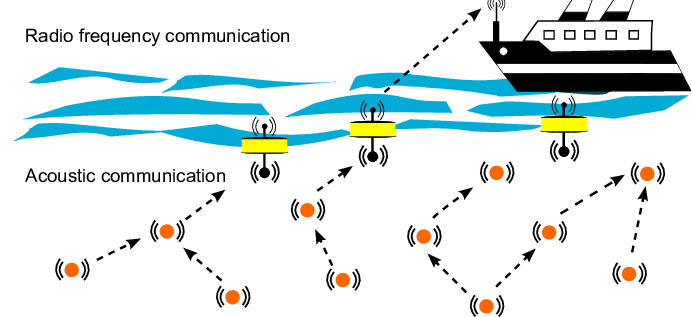
of inter-vehicle communications and understand the strengths and weaknesses of
each mode in terms of latency, bandwidth, reliability, and cost, as it relates
to effectively configuring a vehicle mission needing connectivity between
platforms and humans. Understand the basic tools needed to effectively develop
software for robotic platforms in a group environment and resolve conflicts and
adhere to group goals in the software cycle.
- Teacher: Muhammad Tahir